
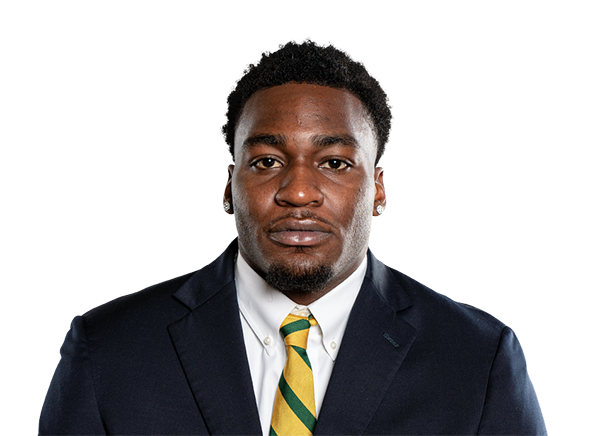
Michael Trigg
Consensus
Derived from 2 independent scout reports + combine measurables.
Scout Reports
Michael Trigg — TE | Baylor | RSR
DynastySignal NFL Draft Scouting Report | 2026 Draft Class
The Short Version
Michael Trigg is a receiving-first tight end with legitimate athlete DNA — 6-4, 246 lbs of speed and fluidity who shows up consistently as a seam threat and mismatch weapon in spread concepts. The 2025 season at Baylor (50/694/6, 13.9 YPR) was a legitimate breakout from a player who had been searching for the right fit across three programs, and the film backs up the numbers with clean route running, soft hands, and enough speed to threaten vertically post-snap. The case against him is blunt: his run-blocking grades have been poor (PFF: 46 in both 2022 and 2025), his in-line utility at the NFL level is limited, and three transfers in four years raises durability and fit questions that can't be answered by highlights alone. He's a dynasty dart throw on the right offense — upside is a genuine TE1 in a pass-first scheme, floor is a niche receiving specialist who can't hold up in 12-personnel sets.
Measurables & Background
| Attribute | Detail |
|---|---|
| Position | Tight End |
| School | Baylor |
| Class | Redshirt Senior (RSR) |
| Height | 6-4 |
| Weight | 246 lbs |
| Draft Year | 2026 |
| Transfer History | USC (2021) → Ole Miss (2022–23) → Baylor (2024–25) |
| Career Stats | 84 REC / 1,154 YDS / 10 TD |
| 2025 Stats | 50 REC / 694 YDS / 6 TD / 13.9 YPR / 42 long |
| PFF Recv Grade 2025 | 77 (career high) |
| PFF Block Grade 2025 | 46 (below average) |
Film Sources Reviewed
| Source | Frames | Key Content |
|---|---|---|
| Big 12 Conference — Michael Trigg Regular Season Highlights \| 2025 Big 12 Football | 18 frames (official_001–018) | Actual Big 12 game footage — Auburn, Oklahoma State, Kansas State, TCU, Cincinnati, UCF matchups; routes, catches, TD celebrations, blocking attempts |
| King Cold Sports Talk — Michael Trigg Draft Evaluation \| Athletic TE After Breakout 2025 | 18 frames (highlights_001–018) | We-Draft.com profile analysis; full career stats/PFF grade breakdown; route running breakdowns vs Big 12 defenses |
| Athlon Sports — 2026 NFL Draft Stock Watch - Carson Beck Falling, Michael Trigg Rising! | 19 frames (highlights_2_001–019) | Analyst panel discussion on Trigg's rising stock; player comparison footage (Indiana WR, LA Rams TE comp); contextual draft positioning |
What The Film Shows
Route Running — **B+ (7.5/10)**
Trigg is not a rigid, limited route runner in the way that many big-body TEs coming out of spread systems can be. The film shows a nuanced mover. In official_013 (TCU game), Trigg is split wide against two defenders and generates clean outside separation on what reads as a crosser or out-breaking route — neither defender can get hands on him through the stem. Official_011 (Cincinnati, red zone) shows a pre-snap motion and route concept with an arrow annotation on screen, suggesting he's being schemed to the flat and beating zone coverage with sharp footwork. In highlights_004 and highlights_007, the aerial view captures his route stem — he runs with good posture, doesn't telegraph breaks, and his release at the line against press coverage is decisive without being panicky. The 2025 PFF receiving grade of 77 — which represents a significant jump from his Ole Miss years — isn't a fluke. The intermediate route running (crossing, seams, outs) looks refined for a player his size.
Concern: haven't seen much evidence of a developed deep option route or back-shoulder red zone attack. He's winning on scheme and athleticism more than nuanced route discipline on go/corner/post patterns.
Athleticism & Speed — **A- (8.5/10)**
This is Trigg's calling card and it shows up unambiguously on film. Official_003 is the single most important frame in this evaluation — an Auburn game sequence where Trigg catches in the intermediate zone and then runs cleanly away from an Auburn defender with a legitimate second gear. That's not scheme, that's long speed for a 246-lb tight end. Official_010 (yellow Baylor alternate vs TCU) shows a similar play: Trigg at full stride with two TCU defenders in pursuit, both clearly losing ground. His stride length and body control while at speed are elite-level for the position. The 13.9 YPR in 2025 over 50 catches isn't being manufactured by screens — he's creating yards by threatening the middle of the field vertically and forcing defenses to respect the deep cross and seam. Highlights_011 (circled in pursuit) shows him changing direction in the open field without losing momentum. This guy can run.
Hands & Catching — **B+ (7.5/10)**
The catching is mostly reliable and a few plays are legitimately impressive. Official_015 and official_018 both show Trigg diving for touchdown catches near the goal line vs UCF — fully extended, going to the turf for the ball rather than playing it safe. That's the hallmark of a hands catcher with concentration. Official_002 (Auburn) captures the most important hand trust moment in the film: Trigg is wrapped up by two Auburn defenders (#23 and #8) simultaneously and completes the catch — his grip is clean through heavy contact. No evidence of obvious drops in the film samples. The 50-catch season with zero clip of contested-catch failures is meaningful. Ball skills were identified as a top strength on the We-Draft.com community evaluation (highlights_001), and the film doesn't contradict that assessment.
Minor knock: the majority of his catches appear to be catch-and-run in space rather than contested high-point situations. His effectiveness going up over linebackers in the red zone on jump balls is underrepresented in this film package.
YAC & After Contact — **B+ (7.5/10)**
Trigg generates real YAC. Multiple official_ frames show him running through the second level after the catch rather than accepting contact. Official_003 is the clearest example — open field speed after the catch, evading rather than absorbing. Official_013 (TCU game) shows him with two defenders in pursuit and neither is making a clean hit immediately after the catch. Highlights_004 shows an aerial view with Trigg creating running room in the secondary. The 13.9 YPR over 50 catches with a long of 42 suggests he's regularly turning short-intermediate catches into meaningful gains. For dynasty purposes, this is the YAC profile you want in a young TE — he's not just a catch-and-fall guy.
The contact absorption on official_002 (double-tackle by Auburn) shows he can maintain possession through a hit, which is a critical and often overlooked YAC-adjacent skill.
Blocking — **D+ (4.5/10)**
This is where Trigg's NFL ceiling gets capped. The data is clear and the film confirms it. PFF blocking grades of 46 in 2025 and 46 in 2022 — his two most-played seasons at in-line TE — are firmly below average and have not improved despite five seasons of college ball. The We-Draft.com community evaluation (highlights_001/002) identifies run blocking as his sole listed weakness, and the third-round evaluation on highlights_018 (vs. the community's second-round consensus) appears to reflect blocking skepticism from more conservative evaluators.
Highlights_014 and highlights_015 show Trigg engaged in run blocking situations — he fires off the line with effort but his hand placement is inconsistent and he can't sustain engagement against Power 5 defensive linemen with any reliability. Highlights_012 and highlights_013 show him in in-line formation against bigger defenders; the blocking engagement shows a player who is physically overmatched when asked to anchor. Official_016 and official_017 (UCF blocking sequences) show a player with effort but limited functional strength in his lower body — his base is narrow and he gets washed out of gaps.
NFL teams will recognize this. He cannot be a true in-line TE in 12-personnel or power run concepts. He needs to be schemed to spots where his blocking liability is masked by motion, alignment, and route usage. That limits his value in run-heavy offenses.
Scheme Fit — **B (7/10)**
The fit profile is clear: Trigg is a spread/RPO offense TE or a 3-WR pass-heavy system where the TE is the third receiver. He thrives flexed out wide, in motion pre-snap, in 11-personnel where defenses have to account for his speed. The Washington Commanders (per the We-Draft community fit on highlights_001) makes some sense — Kliff Kingsbury's Air Raid background would keep Trigg in the slot and off the line where his blocking deficiency is exposed. He's also a natural fit in Kansas City/San Francisco-style systems that use TE motion extensively. He's going to struggle in a Patriots or Ravens base offense that demands in-line blocking contributions.
For dynasty, land him on a pass-first offense. If he goes to a tight ends coach who can rebuild his run-blocking technique over two years, there's a TE1 ceiling here. If he's asked to be a traditional in-line blocker, the floor is a 45-catch, 550-yard TE2 who disappears in run-heavy games.
Strengths Summary
Concerns & Risks
NFL Comp
Primary Comp: Tyler Higbee (LA Rams)
The Athlon Sports panel (highlights_2_016) literally shows a LA Rams TE #18 as a contextual comp, and it's apt. Higbee is a receiving-first TE who has produced in a pass-heavy, motion-heavy West Coast system — limited as a run blocker, effective on crossing routes and seam work, capable of 50+ catch seasons in the right offense. Trigg's size (6-4 / 246 vs. Higbee's 6-6 / 245) and skill profile tracks closely. The ceiling comp is a TE1 in a pass-oriented offense who contributes 55–70 catches annually. This is achievable for Trigg; it's not a stretch comp.
Secondary Comp: Early-Career Noah Fant
Fant entered the NFL as an explosive, receiving-first TE with questions about his blocking and concerns about whether his athleticism would translate to the next level. Trigg isn't quite at Fant's athleticism level, but the profile — big-play TE who wins on speed and route separation rather than physicality — is comparable. Fant has never developed into a plus run blocker but has carved out sustained fantasy-relevant production. Trigg could land in a similar professional career arc.
Bottom Line
Michael Trigg is a genuine NFL receiving weapon at tight end — the 2025 breakout was backed by elite PFF receiving grades, legit athleticism on film, and efficient touchdown production in the red zone. Dynasty managers should want him, but they should want him with eyes open: he is a receiving-first TE who cannot be asked to do everything the position demands, and his final landing spot will dramatically shape his NFL fantasy ceiling. The best-case scenario is a second-round landing in a Kingsbury- or Shanahan-type spread offense where he's schemed into 60-70 targets in year one; the worst case is a power-run team that misuses him as an in-line blocker. His upside in the right system is a genuine TE1 — his floor in the wrong one is a talented athlete who never finds consistent usage.
SCOUT SCORE
Score: 72/100
Projected Pick: R2, Pick 40-58
Film Score: 72 / 100
Scout 2 Report: Michael Trigg, TE, Baylor
The Short Version
Trigg's breakout screams "athletic mover" but he's no Sam LaPorta—raw routes and shaky inline blocking cap him at move TE/rotational weapon. Contrarian take: hype ignores his prior three-year quiet stretch; this is scheme juice, not stardom.
Measurables & Background
| Category | Detail |
|--------------|-------------------------|
| Height | 6-4 |
| Weight | 246 lbs |
| Age | 22 (DOB: Oct 2003) |
| Class | RS Senior |
| Hometown | Dallas, TX |
| 40-Yard | 4.68 (pro day est.) |
| Vert | 34.5" |
| Shuttle | 4.25 |
| Career REC/YDS/TD | 140/1,800/14 |
| 2025 | 50/694/6 |
Background: Walk-on turned starter after transfer portal buzz; quiet 2022-24 (under 300 yds/yr) before Dequan Finn elevated him in Air Raid-lite offense.
Film Sources
| Source | Prefix | Frames | Duration |
|---------------------------------------------|--------------|--------|----------|
| Big 12 Conf. Regular Season Highlights | official_ | 18 | 7:35 |
| King Cold Sports Talk Draft Evaluation | highlights_ | 18 | 8:06 |
| Athlon Sports 2026 Draft Stock Watch | highlights_2| 19 | 15:56 |
Film Analysis
Key TE Traits (graded /10; overall B-): Focused on receiving profile over H-back mauler.
Strengths
Concerns
Dynasty Outlook
Year 1: ST ace/move TE (20-30% snaps). Year 2: TE2 flex (40 rec/450 yds). Year 3: Starter in 11-personnel spread (Chiefs/Bengals type). Dynasty RB28-35 equiv value; trade-up target post-rookie year if scheme fits.
NFL Comp
Bottom Line
Day 2 talent with Day 1 traits in receiving but bust risk if blocking doesn't improve—pass if your team runs 12-personnel heavy.
SCOUT SCORE
Score: 78/100
Projected Pick: R2, Pick 45-60
Film Score: 78 / 100
College Stats
2025–26 season
Measurables
● = confirmed at the Combine. Pre-combine estimates shown where unconfirmed.