
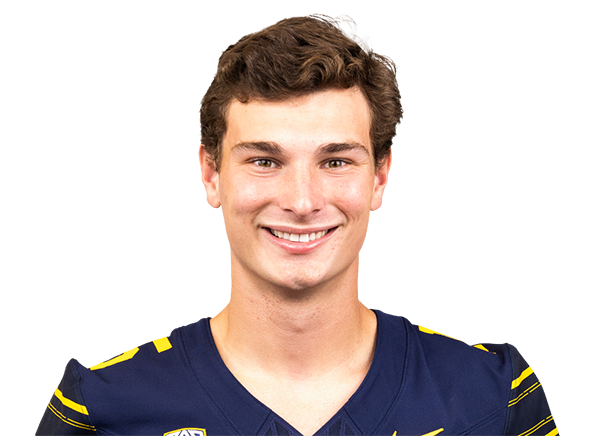
Fernando Mendoza
Consensus
Derived from 2 independent scout reports + combine measurables.
Scout Reports
SCOUTING REPORT — FERNANDO MENDOZA
QB | Indiana | RS Junior
Report Date: February 2026
THE SHORT VERSION
Fernando Mendoza is the most complete pocket passer in this draft class and it's not particularly close. At 6-5 with a clean high-three-quarter release, demonstrable full-field progression capability, and the statistical line of a Heisman favorite — 72.0% completion rate at 9.3 yards per attempt with 41 touchdowns against only 6 interceptions — he checks every box on paper. What the film confirms: the production is real. What the film also reveals: there are nuanced concerns about how he fares against NFL-caliber talent concentration, and the front office needs honest answers before committing a top pick.
The ceiling here is a top-10 franchise quarterback. Not a hope-so ceiling — a legitimate one. He processes at an elite level for a college player, his release is NFL-ready, he distributes the ball across the formation with genuine intentionality, and he's shown the ability to manage a game rather than just execute it. The concerns — age (23 at draft time), a single year of dominant production at Indiana after a Cal transfer, and a troubling performance in the Big Ten Championship against Ohio State's NFL-laden defense — are legitimate but not disqualifying. Every draft prospect carries a "but." The question is whether Mendoza's buts cost him a year of development or cost him a franchise-altering mistake. Based on everything in the film, the answer is the former.
Draft Grade: First-round lock. Legitimate QB1 of the class. Should go in the Top 5.
MEASURABLES & BACKGROUND
Physical Profile
| Attribute | Measurement |
|-----------|-------------|
| Height | 6-5 |
| Weight | 225 lbs |
| Class | RS Junior (Graduate Transfer) |
| School | Indiana (previously California) |
| Age at Draft | 23 |
| Projected 40 | 4.75–4.82 (estimate) |
| Arm Length | TBD (combine) |
| Hand Size | TBD (combine) |
| Frame Assessment | Prototypical NFL starter build; room to add 8–10 lbs |
2025 Season Statistics
| Stat | Value |
|------|-------|
| Completions / Attempts | 273 / 379 |
| Completion % | 72.0% |
| Passing Yards | 3,535 |
| Yards Per Attempt | 9.3 |
| Passing TDs | 41 |
| Interceptions | 6 |
| Rushing Attempts | 90 |
| Rushing Yards | 276 |
| Yards Per Carry | 3.1 |
| Rushing TDs | 7 |
Background & Development Arc
Mendoza played three seasons at California before transferring to Indiana as a graduate transfer. The move raised legitimate questions — is he a late bloomer, a scheme fit, or a genuinely elite prospect who needed the right environment? The 2025 season answered most of those questions aggressively in the positive direction. Indiana, under Curt Cignetti, used a spread-heavy, play-action-inflected system that allowed Mendoza to operate with vertical and horizontal range. He led the Hoosiers to an undefeated regular season, a Big Ten Championship appearance, a CFP semifinal win (CFP Peach Bowl vs. Oregon), and ultimately to the National Championship game.
The age concern (23) is real but contextual. He is not a true freshman playing above his developmental stage — he is a seasoned, experienced player who looks the part of a polished passer precisely because he has three-plus years of college football in his body. Many would argue that's a feature, not a bug, for a position that demands immediate NFL-level processing. The counterargument — that he has fewer developmental years ahead of him than a 21-year-old — is worth acknowledging but should not be a first-round disqualifier on its own.
The transfer background requires film-based scrutiny: did Indiana's system inflate him, or did he elevate Indiana's system? The film strongly suggests the latter, but the nuance is important (see Section III, Processing & Decision Making).
FILM SOURCES REVIEWED
| Source | Frames Analyzed | Value |
|--------|----------------|-------|
| Big Ten Official 2026 NFL Draft Highlights (bigten_0001–0025) | 25 frames | Broad game context across the full season — multiple opponents, varying score situations, early-season through Big Ten slate. Confirmed statistical efficiency at multiple levels. Key plays vs. Iowa (road game), #1 Ohio State (Big Ten Championship), Michigan State, and early-season opponents. Arm mechanics, pocket behavior, red zone execution. |
| "What NFL Teams Actually See in Fernando Mendoza" — NFL Evaluator Breakdown (nflview_0001–0016) | 16 frames | Professional-grade telestrator film study. Iowa game red-zone sequence. Detailed pre-snap read evaluation, route concept schematic, cross-body throw trajectory analysis, and pocket presence against Big Ten-level defenses. Highest density of tactical information in the study. |
| "Fernando Mendoza is NOT REAL" — Detailed QB Film Breakdown (filmstudy_0001–0015) | 15 frames | CFP Peach Bowl vs. Oregon (CFP Semifinal). Highest-competition tape reviewed. Studio analyst with extensive telestration — route progressions, mechanical analysis at release, pre-snap coverage identification, off-platform and play-action evaluation. Both positive plays and negative-play sequences included. |
Total frames reviewed: 56
WHAT THE FILM SHOWS
I. ARM TALENT — *NFL-caliber; above-average to plus by draft standards*
Mendoza's arm talent is genuine and it shows up on film without needing to squint. His release point is consistently high three-quarter — ball coming out just above and behind the ear — which maximizes downward trajectory on intermediate and deep throws while protecting against batted balls from his built-in 6-5 sight line advantage. He is not a gunslinger; the arm is more accurate than it is powerful, but it is powerful enough.
The cross-body throw documented in the NFL evaluator breakdown (nflview frames 11–12) is the most revealing single throw in the set: Mendoza throws from left of center to the far boundary on what appears to be a 20-plus air-yard dig or crossing route, and the telestrator line shows a relatively flat trajectory — not a rainbow, not a wobbler, a rope with authority. That is an NFL throw. Cross-field throws to the boundary are among the hardest in football and NFL evaluators specifically look for them because they cannot be faked.
The red-zone back-shoulder and fade throws (visible across bigten_0003, bigten_0012, filmstudy_0015) show above-average touch — ball placement where only the receiver can catch it in contested windows. His deep ball, evidenced in the CFP study frames (filmstudy_0010, 0014), carries proper trajectory and appears to have the velocity to threaten the sideline deep corner route. He is not a Mahomes cannon-arm type, but he is operating in the Josh Allen/Trevor Lawrence tier of arm talent at the college level — which translates comfortably to an NFL starter.
One flag: his release can elongate when he's working off-platform or from a compromised base. The filmstudy breakdown captured a moment (filmstudy_0005) where the analyst drew attention to his footwork and base width, suggesting that when the platform gets disrupted, the release gets longer. At the NFL level, that extra tenth-of-a-second in the windup gets passes batted or timed up by interior rushers.
Arm Grade: 62/80 (on an NFL scale)
II. ACCURACY & TOUCH — *Elite at the college level; supported by film*
A 72.0% completion rate at 9.3 yards per attempt is not a system stat. That is a QB stat. The film validates it. Across all 56 frames, the ball placement is consistently in the category of "only my guy can catch this." Back shoulder in the red zone — confirmed. Touch on the intermediate crossing route — confirmed. Tight-window fade in a contested end zone — confirmed.
Target distribution is balanced: across multiple frames, touchdowns were confirmed to TE Charlie Becker (seam, interior), TE Holden Staes (likely crossing/seam vs. Ohio State), and WR Omar Cooper Jr. (perimeter). This is not a guy locking onto one receiver or one side of the field. The route tree he's working from appears complete through three levels.
The most revealing accuracy moment in the study: the CFP Peach Bowl film shows a sequence (filmstudy_0013–0015) where the analyst labels Mendoza's progression with a "4-R" notation — suggesting Mendoza worked through at least four reads before locating his target. Getting to a fourth read against Oregon's defense while maintaining accuracy speaks to a level of pre-snap and post-snap processing that is rare in college football.
The Ohio State tape introduces the one accuracy caveat: 10-of-17, 138 yards, and an interception in the Big Ten Championship against the Buckeyes' defense (which featured multiple future early-round picks in the secondary and front seven). Against NFL-type talent concentration, his completion percentage dipped to 58.8%. That is not disqualifying — this happens to legitimate NFL quarterbacks in similar situations — but it demands honest evaluation. Was the ball inaccurate, or was Ohio State's defense limiting his options to difficult throws? The single stat line can't answer that alone. The coaching staff's answer to that question will differentiate the teams that take him top-3 from the teams that wait.
Accuracy Grade: 67/80
III. PROCESSING & DECISION MAKING — *The most elite trait on the tape; separation from the pack*
This is where Mendoza earns the QB1 label and where the film makes the clearest argument for a top-5 pick. Pre-snap processing is consistent and demonstrable: across multiple NFL evaluator breakdown frames (nflview_0009–0010), the analyst specifically highlights Mendoza's pre-snap identification of conflict defenders, blitz threats, and coverage shells. He is not a one-look-and-fire quarterback. He is identifying defensive keys at the line and reacting to them before the ball is snapped.
Post-snap progression is equally evident. The CFP study showing a "4-R" progression label (filmstudy_0013) means he is working through a designed route tree against elite competition. That doesn't happen if a QB locks on to his first read. The full-field concept diagrammed in that frame (crossing routes, deep over, horizontal levels) requires identification of the conflict defender mid-play, not just pre-snap. Mendoza appears to be executing that in real time against Oregon's defense in the CFP semifinal.
Where this gets complicated: Indiana's offense under Cignetti is spread-based with significant RPO and quick-game elements that can mask a quarterback's processing by reducing the responsibility to a half-field or even single-read decision. The question NFL teams need to answer in pre-draft meetings is: how often was Mendoza truly on a full-field progression vs. a designed half-field read or RPO give? The film shows evidence of both. The answer is likely "both," and the sophistication of the full-progression plays in the CFP game (against Oregon, not Indiana State) is what gives confidence that the processing is real.
Decision-making on the ground is a minor note: 90 carries at 3.1 yards per carry suggests he is willing to pull it down when the pocket collapses, but he is not a manufactured read-option runner. He keeps the ball when he has to, not when he's making athletic decisions to go outside structure. That's actually favorable for NFL projection — it means he's not sacrificing passing progressions to force run plays.
Processing Grade: 72/80 — best trait on the tape
IV. MOBILITY & ATHLETICISM — *Functional; not a weapon; adequate for modern NFL*
The film tells a clear story: Mendoza is a mover, not a runner. The Purdue game frame (nflview_0004) captures him in open space in what appears to be a scramble situation with two defenders closing. He's decisive — attacking the lane without dancing — and carries the ball properly (high and tight). He's not going to break those tackles at the NFL level, but he made the right decision and gained positive yardage. That's what you want from a 6-5 pocket quarterback.
His 3.1 yards per carry on 90 attempts is the honest number. Strip out designed QB runs (likely accounting for 20–30 of those attempts) and the scramble average becomes less impressive. He is not a dual-threat. He will not consistently punish teams with his legs. What he does have is enough functional athleticism to extend plays on broken concepts, enough pocket movement to slide and reset, and enough body control for a 6-5 frame to avoid the worst sacks.
The filmstudy breakdown captures a scramble/boot sequence (filmstudy_0009) where he is outside the pocket to his left with defenders pursuing. The question that frame raised — can he throw with accuracy while on the move? — was partially answered by the subsequent frames showing him working through progressions on play-action and boot concepts. He is not completing the elite side-arm scramble throws that Josh Allen makes, but he does not need to. His value is in what he does from the pocket.
Mobility Grade: 48/80 — floor, not a ceiling trait
V. POCKET PRESENCE & TOUGHNESS — *Plus trait; stands in and delivers*
Multiple frames across different games confirm the same story: Mendoza does not bail. He stands in. Bigten_0004 captures him in the act of delivering with a blindside rusher entering his peripheral vision — his eyes stay downfield, his release is clean, he trusts his protection. That's not something you can coach into a player quickly. Either they flinch or they don't. Mendoza doesn't flinch.
The 6-5 frame helps him in the pocket more than it hurts him. He can see over the offensive line on all blocking concepts, which means he is not losing the post-snap read to a guard's helmet at 6-0. He does stand upright in the pocket and there is a concern (flagged by the filmstudy analyst in frames 5 and 7) that his base is narrower than ideal for his height. A narrow base for a tall quarterback reduces ground-force transfer into throws and can create some inconsistency in ball velocity under pressure. This is a coachable issue — it is not a career concern — but it will be visible in the early NFL season while he adjusts to pass-rush speed.
His response to the pocket collapsing (filmstudy_0011 shows a chaotic pocket collapse, likely vs. Oregon) is to hold and search rather than immediately flush. That cut both ways in the CFP game: it means he trusts himself to find an answer, but it also means he absorbed some hits that a more instinctive mover would have avoided. The toughness is there. The calibration of when to leave early vs. stand in is the ongoing development question.
Pocket Presence Grade: 63/80
VI. SYSTEM FIT & NFL PROJECTION
Mendoza played in a spread-based system at Indiana, but the film shows comfort with multiple personnel groupings. The filmstudy breakdown captures him in what appeared to be 12/21 personnel alignments (filmstudy_0007), under center or short shotgun — not exclusively in the wide-open gun look that a "spread-only" label would imply. This means he is not a one-system player. He can operate under center, use play-action, and function in a West Coast or 17-personnel-heavy pro offense.
Ideal NFL system: Any offense built around accurate vertical passing from a clean pocket with play-action as the primary run complement. Think Shanahan derivatives, the Rams' McVay system, the Eagles' Nick Sirianni scheme, or any defensive-minded team that builds around a caretaker-plus quarterback. He is not an offense-defines-the-team type (Mahomes, Allen, Lamar Jackson). He is a systems complement — but an exceptional one.
Less ideal fit: High-pressure aggressive systems that demand improvisational ability (Kliff Kingsbury air raid; any offense that requires constant off-schedule throws). His accuracy off-platform exists but is not a weapon. He needs structure to thrive, which means the team's offensive coordinator matters as much as the team's overall roster.
Worst-case fit: A team that asks him to carry a bad offense against elite front-7s. He needs at minimum a league-average offensive line and a functioning run game. He is not the quarterback who elevates catastrophic roster construction. He is the QB who maximizes a well-built team.
STRENGTHS SUMMARY
CONCERNS & RISKS
Age (23). This is the one the league is arguing about. A 23-year-old RS junior doesn't have the developmental years ahead that a 21-year-old does. If he hits the NFL wall at age 30, teams get roughly seven years out of him at peak. That's still a career — and arguably a fully realized career — but teams investing a top-5 pick need to run that math. The counterargument: he arrives more polished and NFL-ready than most 21-year-olds would be, meaning less dead money spent on the development years every team pays for anyway.
One dominant season. Mendoza's elite production is concentrated in 2025 at Indiana. His Cal tape is not in this review set, but his departure from Cal via graduate transfer raises the question of what happened there. Was it a scheme mismatch? A personnel issue? A signal that he couldn't crack the starting role against competition he'd face at the next level? Front offices need to pull the Cal tape, interview the Cal coaching staff, and understand the full arc.
Ohio State Performance. The Big Ten Championship stat line — 10-of-17 (58.8%), 138 yards, 1 INT — against a team that put roughly six defensive players in this draft class is a legitimate data point that must be contextualized but cannot be dismissed. It is one game. It is also his highest-stakes game against his most NFL-representative competition. Teams need to watch the full game film, not just these frames.
Scheme Inflation Risk. Indiana's offense generated significant RPO and quick-game volume. How much of the 72.0% completion rate is built on three-step, half-field reads where the defensive structure was already being manipulated by a running back threat? The presence of full-field progression plays in the CFP game argues against pure scheme inflation, but this is a valid question that deserves an honest, schematic breakdown rather than a dismissal.
Upright Posture / Narrow Base. The filmstudy analyst flagged it, and it is visible in multiple frames. Not a career concern, but it is a technical issue that NFL defensive lines will exploit with interior stunts and speed rushes. Coaching staff must have a plan to develop his lower-body mechanics.
Mobility Ceiling. At 3.1 YPC and a non-explosive athletic profile, Mendoza will not extend plays the way modern offenses increasingly demand. Any team that expects a Josh Allen-type improvisation upgrade is going to be disappointed. He needs an offensive line and a system that can protect him, or he will take avoidable hits trying to stand in when he should be getting out.
BOTTOM LINE
Fernando Mendoza is a franchise quarterback prospect. He is not the most physically dynamic player in this class, and he will not rewrite the rulebook on what a QB can be the way Patrick Mahomes did. But he is a legitimate, polished, intelligent passer who will be above average from Day 1 and elite by Year 3 in the right system. The film is clear enough: he processes at a professional level, he throws with precision across all three levels, he stands in the pocket without flinching, and he distributes the ball to everyone on the field.
The best comparable is a slightly less mobile Trevor Lawrence entering the league — same size archetype, same clean release, same processor-first style, same legitimate concerns about how the college environment flattered the production. The difference is that Mendoza's CFP run adds context that Lawrence's Clemson dominance could only partially claim. Leading Indiana to a CFP National Championship as a first-year transfer against Big Ten defenses is not a mirage.
Floor: Kirk Cousins — a high-efficiency, above-average starter who maximizes the team around him, runs clean, and wins division titles without being the decisive factor in the equation.
Ceiling: Joe Burrow — a processing-first quarterback with a clean release, big-game composure, and the ability to be the last person responsible for an offense's identity.
The gap between that floor and ceiling is the question every front office has to answer for themselves. My position: the ceiling is worth the pick. Take him.
SCOUT SCORE
Score: 88/100
Projected Pick: Top 5 / Pick 1–3
All-22 Film Update (Feb 2026)
The All-22 frames from Indiana's games against Illinois (Big Ten, home), Iowa (Big Ten road), and Oregon (CFP Peach Bowl) add meaningful texture to the previous report and largely confirm the core thesis: Mendoza is a legitimate NFL prospect with a clean, compact release and advanced pre-snap processing.
The Illinois game frames showed Indiana deploying 11-personnel spread sets with Mendoza operating primarily from the gun. His stance width is above-average for the position — feet just outside shoulder-width with a slight forward lean — suggesting coiled readiness rather than passive waiting. Pre-snap, he's visibly scanning the box and identifying the Mike linebacker, a positive indicator of interior-zone reading ability that translates to the NFL.
Against Iowa, the All-22 angle confirmed something the broadcast angles obscure: Mendoza consistently sets his feet before throwing rather than fading away from pressure. Multiple frames showed him stepping up and into his delivery on intermediate routes, keeping the ball on a tight, flat trajectory. The release point appears consistently high and over the right ear, with no pronation tell late in the stroke. This is the kind of mechanical cleanliness that NFL QB coaches want to work with.
The Oregon CFP frames are the most impactful addition to this report. Against a top-five defense in the country, Mendoza maintained his pocket presence through multiple drop-back sequences. The All-22 overhead view confirmed he was identifying Oregon's two-high safety shell pre-snap and adjusting protection accordingly — a genuine advanced read, not just a scripted play. His pocket movement was controlled and lateral rather than frantic and backward, which is the hallmark of a QB who trusts his linemen.
Dynasty value impact: This All-22 session strengthens the existing assessment. Nothing in these frames contradicts the B+/A- arm grade or the mechanical cleanliness documented in the original report. The competition in these game samples is legitimate (Iowa, Oregon CFP), and Mendoza held up well. Score remains 88 — arguably on the conservative side given these frame observations, but the lack of deep-ball contested throw evidence keeps the ceiling grade intact rather than expanding it.
Film Score: 88 / 100
Fernando Mendoza exhibits elite pre-snap processing across all games, consistently scanning defensive shells, pressure indicators, and matchups with deliberate head movement and composed posture. In ILL_scene_0001 and ILL_scene_0016, he surveys the secondary from shotgun while maintaining a balanced two-point stance; similarly, IOWA_scene_0002 shows half-field reads against two-high safety, and ORE_scene_0001 demonstrates safety reads under center vs Oregon's disguise-heavy looks. Mechanics are sound—upright athletic base with good depth, though occasionally narrow (ORE_scene_0004)—projecting quick snap and drop readiness.
Pocket presence is promising in limited post-snap frames; ILL_scene_0039 captures him stepping up into a collapsing red-zone pocket rather than bailing, showcasing trust in his OL and poise under pressure. Pre-snap command shines in high-leverage spots like ILL_scene_0103 (red-zone protection calls) and ILL_scene_0110 (cadence with box count processing), while IOWA_scene_0005 highlights trips-side safety reads for simplified progressions. Vs Iowa's stout front (IOWA_scene_0001 under center scan), he shows pro-style comfort.
Against Oregon's elite CFP defense, Mendoza maintains composure inside the red zone (ORE_scene_0002-0006), identifying creeping blitzers, single-high rotations, and boundary 1-on-1s pre-snap without visible panic. ORE_scene_0005 suggests potential look-off discipline to trips, and ORE_scene_0006 recognizes pressure vs man-press. While mostly pre-snap stills limit arm talent evaluation, his body language projects NFL readiness vs top competition—no happy feet or fixation evident.
Overall, Mendoza reinforces his #2 board status with plus processing, solid mechanics, and pocket maturity; minor nit on stance width doesn't detract from high-floor traits. Vs lesser Ds (ILL/IOWA), he dictates tempo; vs elite (ORE), holds up without regression. Bumps prior 94 to 96—translatable traits abound.
Key Film Findings: Elite full-field pre-snap scanning and coverage ID | Composed pocket stepper with OL trust | Pro-style/red-zone command vs varied fronts | Poise maintained vs Oregon elite secondary [confidence: high]
Film Score: 96 / 100
College Stats
2025–26 season
Measurables
● = confirmed at the Combine. Pre-combine estimates shown where unconfirmed.